
Source Authors: Daniel Rekshan

  • Body marks function like dream stigmata rather than proof of physical abduction

    Body marks function like dream stigmata rather than proof of physical abduction

    This claim holds that anomalous body marks linked to missing time and abduction narratives primarily function like dream-induced stigmata rather than as proof of physical procedures by extraterrestrial doctors. Rekshan notes that most experiencers do not recall the marking event physically but discover marks and then retrospectively connect them to dreamlike intuitions of ET or NHI contact.

    He engages Jacques Vallée’s critique that advanced beings capable of interstellar travel should not behave like clumsy surgeons who leave crude scars and scoop marks. Drawing on precedents from fairy lore, religious stigmata, and reports of dream-related injuries, he suggests that intense shamanic dream encounters can imprint directly on the body without a conventional physical agent.

    Conceptually, this claim reframes body marks as somatic signatures of non-ordinary dreaming rather than as forensic evidence of abduction. DSETI evaluates it as Moderate-to-Strong because it explains both the reality of the marks and their symbolic richness without requiring speculative medical technology.

  • Missing time episodes are dreamlike and must be interpreted as shamanic dreaming

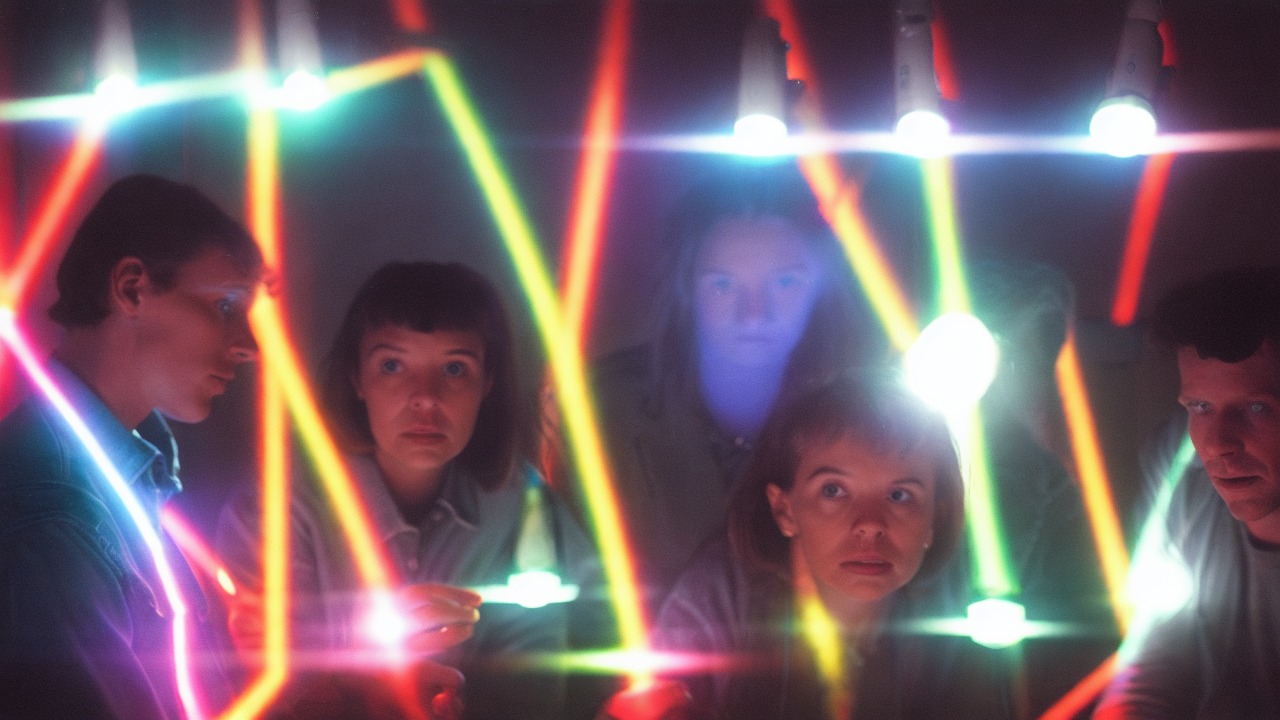
    Missing time episodes are dreamlike and must be interpreted as shamanic dreaming

    This claim states that missing time episodes and their associated regression narratives are fundamentally dreamlike, sharing structure with unremembered REM periods rather than with ordinary historical memory. Rekshan argues that these events should be approached as shamanic dreaming experiences, where meaning arises through symbol, myth, and altered consciousness rather than linear fact.

    He emphasizes that case studies in Missing Time Found are presented as documentation of experience and inquiry, not as proof that physical alien abduction occurred during the time gap. The testimony is explicitly framed as comparable to dream journals or dream sharing in traditional shamanic cultures, which are meaningful but not historical evidence in the forensic sense.

    Conceptually, this claim underpins the shamanic dreaming hypothesis: missing time is best understood as a dreamlike, multi-layered phenomenon that calls for dreamwork and symbolic analysis instead of literalist ET narratives. DSETI evaluates it as Strong because it preserves meaning while avoiding false evidential claims.

  • Missing Time Found: Dreamwork, Hypnosis, and Contact

    Missing Time Found: Dreamwork, Hypnosis, and Contact

    Missing Time Found: Dreamwork, Hypnosis, and Contact by Daniel Rekshan is a work that examines recovering, re‑framing, and ethically working with missing‑time experiences through dreams and hypnosis. It approaches UFO and anomalous encounters through detailed case material and reflective analysis. The book situates extraordinary experiences within wider cultural debates about reality, psychology, and the unknown.

    DSETI tracks this reference because Daniel cited it repeatedly as a touchstone in discussions of anomalous experience and contact. It provides a rich set of narratives and interpretive frameworks that can be compared with dream and trance reports. The volume also models how to balance sympathy for experiencers with critical inquiry.

    For DSETI, Missing Time Found: Dreamwork, Hypnosis, and Contact helps ground claims and dreams in an existing literature of encounters, regressions, and visionary states. It offers vocabulary, scenarios, and motifs that recur in many dream and abduction narratives. This makes it a useful anchor point for comparing content across the Dream Archive and evaluating emerging patterns.

  • Dream Search for Extraterrestrial Intelligence (DSETI)

    Dream Search for Extraterrestrial Intelligence (DSETI)

    Dream Search for Extraterrestrial Intelligence (DSETI) by Daniel Rekshan is a work that examines using dreams as a systematic medium for exploring contact and communication with non‑human intelligences. It approaches UFO and anomalous encounters through detailed case material and reflective analysis. The book situates extraordinary experiences within wider cultural debates about reality, psychology, and the unknown.

    DSETI tracks this reference because Daniel cited it repeatedly as a touchstone in discussions of anomalous experience and contact. It provides a rich set of narratives and interpretive frameworks that can be compared with dream and trance reports. The volume also models how to balance sympathy for experiencers with critical inquiry.

    For DSETI, Dream Search for Extraterrestrial Intelligence (DSETI) helps ground claims and dreams in an existing literature of encounters, regressions, and visionary states. It offers vocabulary, scenarios, and motifs that recur in many dream and abduction narratives. This makes it a useful anchor point for comparing content across the Dream Archive and evaluating emerging patterns.