
Emotions: Uncertainty

  • Trance Entry Through Relaxation

    Trance Entry Through Relaxation

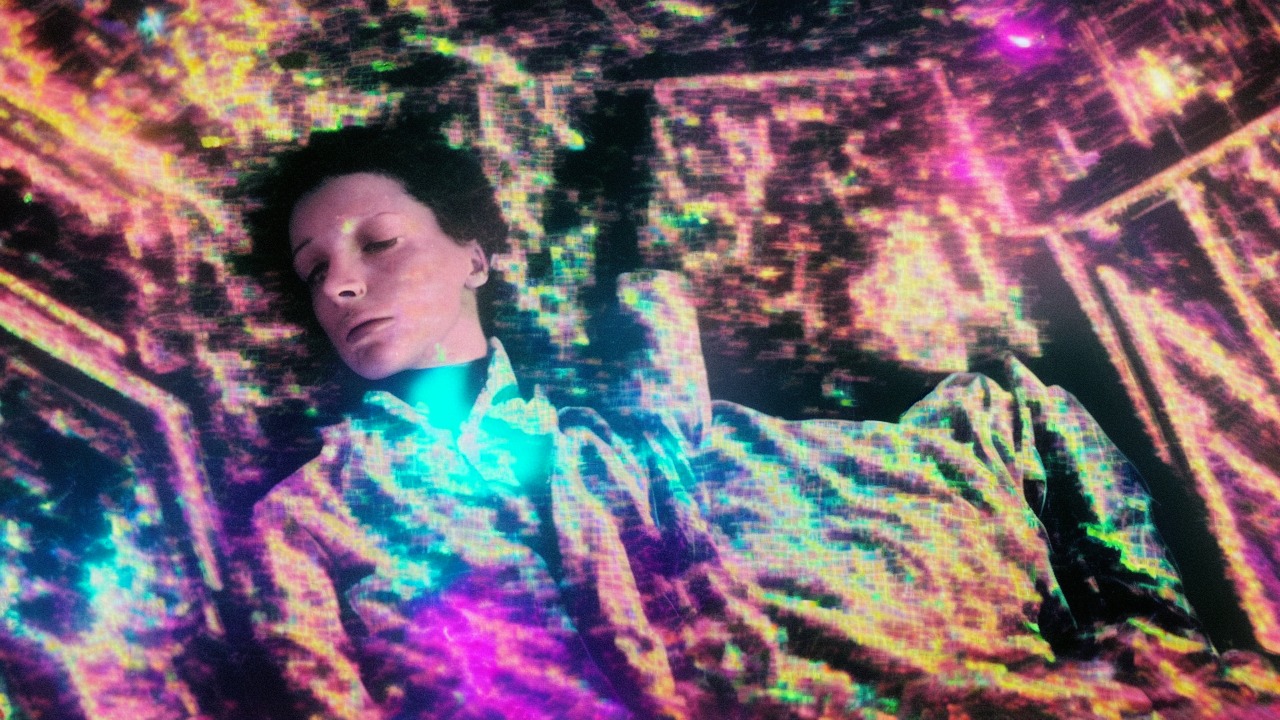
    Mack describes how abductees often slip into altered, trance-like states with minimal prompting. A simple relaxation exercise allows memories to surface in symbolic fragments. These fragments include floating sensations, luminous rooms, and the presence of beings surrounding the experiencer.

    The state resembles the threshold between wakefulness and dreaming, containing drifting images and emotional surges. Memories appear more like dream symbols than historical scenes, yet carry the weight of lived experience.

    Mack emphasizes that this hybrid state is particularly useful for exploring encounters, for it reveals the dreamlike texture underlying the abduction phenomenon.

  • Jean’s Nightgown Anomaly Upon Waking

    Jean’s Nightgown Anomaly Upon Waking

    After waking from her encounter, Jean notices that her nightgown is on inside-out and untied. This small detail heightens her sense that the experience was both real and dreamlike.

    She recalls waking Roy and telling him she had a weird dream, indicating that she initially interpreted the events through dream logic rather than literal intrusion. The tactile confusion of clothing displacement is common in dreams involving disorientation or altered space.

    Mack notes that such physical anomalies serve as liminal markers between dreaming and waking, reinforcing the hybrid nature of Jean’s experience.

  • Emotional Dual-Mind Observation

    Emotional Dual-Mind Observation

    Hopkins describes a woman witnessing an unfamiliar bright room and shirtless figures while also believing she is still in her bedroom. She experiences two streams of awareness at once, as if occupying two realities.

    This dual-mind perception is characteristic of altered dream states where symbolic scenes overlap with waking memory. She reports confusion about the lack of a patio and pool where she expects them to be.

    Hopkins interprets the experience as a liminal encounter moment in which dream logic and waking logic coexist.

  • Machine Examination Visualization

    Machine Examination Visualization

    Jacobs recounts an abductee describing a mechanical examination in which lights, panels, and geometric shapes shift around her body. The movement feels surreal, as though she is immersed in a dream generated by unknown technology. She cannot determine whether the machine touches her or simply observes.

    The scene includes rhythmic vibrations and synchronized humming that feel symbolic rather than physical. She senses communication through the pattern of the machine’s movement.

    Jacobs sees such mechanical examinations as secondary phenomena with strong dreamlike qualities.

  • The Dim Corridor of Amnesia

    The Dim Corridor of Amnesia

    Jacobs documents a recurring image reported across abductees: being guided down a dim corridor within the craft. The corridor is narrow, quiet, and appears to swallow sound, resembling a dreamlike tunnel between states of consciousness. The experiencer senses she is entering a deeper layer of the event.

    Her memory becomes fragmented as she moves forward. The corridor feels both familiar and unreal, as though its geometry shifts with attention. She recalls feeling suspended in time, unable to determine how long she walked.

    Jacobs interprets these corridor passages as transitional, containing the symbolic function of dream tunnels that lead from one realm of meaning into another.

  • Voice Telling Her to “Remember the Light”

    Voice Telling Her to “Remember the Light”

    Ring recounts a detailed encounter from an Alaskan witness who follows unusual lights and discovers a tall, silent figure near a craft. She sits on a moose’s carcass while observing colored lights emerging and retracting into the craft.

    A nonhuman figure stands near her without speaking. She then hears a clear internal voice telling her, “Remember the light.” The message feels dreamlike and symbolic, resonating deeply.

    Ring interprets this scene as a hybrid encounter with visionary and dreamlike elements that left a lasting psychological imprint.

  • Dream Regression of Moving Through a Curved Corridor

    Dream Regression of Moving Through a Curved Corridor

    A subject in Cannon’s sessions reports being guided down a long curved corridor. The walls seem soft and reflective, bending like flexible metal. The movement forward feels weightless, with auditory dampening typical of dream transitions.

    Figures escort the subject without speaking. Symbols or images appear on the walls, shifting as the subject’s attention moves. The corridor terminates in a bright opening that feels like a threshold between states.

    Cannon interprets this scene as dreamlike access to a different level of consciousness during the encounter.

  • Vision of Weightless Thought-Like Sky Objects

    Vision of Weightless Thought-Like Sky Objects

    Jung describes accounts of luminous sky objects that move with a fluidity resembling thoughts rather than mechanical propulsion. Witnesses report that the objects shift direction or pause as if guided by intention.

    He sees these characteristics as hallmarks of dream imagery: weightless, symbolic, and responsive to psychological states. The objects thus occupy a liminal zone between vision and dream.

    Jung uses these reports to illustrate how unconscious content can surface as externalized dreamlike imagery during periods of tension.

  • Vision of Round Objects as Archetypal Projections

    Vision of Round Objects as Archetypal Projections

    Jung examines reports of luminous round objects seen in the sky and argues that they mirror the circular symbols found in dreams. These objects often appear motionless, reflective, or radiant, behaving in ways that resemble psychic images rather than physical machines.

    To Jung, their mandala-like structure suggests an archetypal origin. He proposes that collective emotional tension may cause inward symbols to be projected outward, giving rise to visionary encounters.

    Thus, sightings of round objects function as dreamlike manifestations of the unconscious, blurring the distinction between inner and outer realities.